The post PM Modi inaugurates Vantara: Inside Anant Ambani’s Grand Mission for Wildlife Conservation first appeared on Corp India News.
]]>
Spanning 3,000 acres within the Green Belt of Reliance’s Jamnagar Refinery Complex, Vantara provides sanctuary to animals saved from cruelty, habitat destruction, and imminent extinction. However, what sets it apart is not just its scale but its holistic approach—where traditional values of compassion intersect with modern veterinary science, setting a precedent for wildlife conservation in India and beyond.
A New Standard for Wildlife Rescue
Anant Ambani’s vision for Vantara is simple yet transformative: “Vantara is a combination of age-old ethical values of compassion with the excellence of modern scientific and technological professionalism.” It is built on a deep sense of responsibility—not just toward India’s endangered species but toward global biodiversity.
Inaugurated Vantara, a unique wildlife conservation, rescue and rehabilitation initiative, which provides a safe haven for animals while promoting ecological sustainability and wildlife welfare. I commend Anant Ambani and his entire team for this very compassionate effort. pic.twitter.com/NeNjy5LnkO
— Narendra Modi (@narendramodi) March 4, 2025
This commitment is most evident in Vantara’s medical infrastructure, designed to provide unparalleled veterinary care for rescued animals. The center boasts a 1 lakh sq. ft. hospital equipped with advanced diagnostic tools, including MRI and CT scans, ICUs, and specialized departments for cardiology, nephrology, and wildlife anesthesia—a level of care that even some human hospitals lack.
One of its most remarkable features is a 25,000 sq. ft. elephant hospital, the largest of its kind in India, offering dedicated treatment for rescued elephants. A 14,000 sq. ft. elephant kitchen ensures that these gentle giants receive customized diets, while hydrotherapy pools help treat arthritis and joint ailments—common issues in elephants rescued from captivity and neglect.
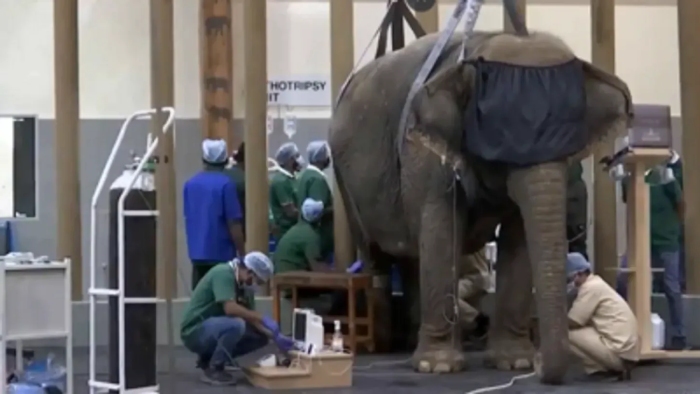
Beyond treatment, Vantara’s rescue and rehabilitation efforts are equally impressive. The center has rescued over 200 leopards and more than 1,000 crocodiles, many of whom suffered from habitat destruction and human-wildlife conflict. With a team of 2,100 dedicated staff members, including veterinary experts and caretakers, Vantara has set a new benchmark in wildlife conservation.
A National Recognition for Excellence
Vantara’s groundbreaking efforts were recently acknowledged by the Indian government through the prestigious Prani Mitra National Award in the Corporate category. This recognition is a testament to its flagship initiative, the Radhe Krishna Temple Elephant Welfare Trust (RKTEWT), which focuses on the rescue and rehabilitation of elephants. The award highlights Vantara’s contributions to conservation on a national scale, reinforcing its position as a leader in ethical wildlife management.
Beyond elephants, the sanctuary is home to a diverse range of species, both native and exotic, many of which are on the brink of extinction. By creating an environment that closely mimics natural habitats, Vantara offers these animals a place to recover, thrive, and live with dignity. The sanctuary’s efforts illustrate that conservation is not just about protection but about restoring a sense of belonging to the planet’s most vulnerable creatures.
Stories of Survival and Hope
Vantara’s success is best reflected in the stories of the animals it has saved. Take Pancham, a tiger whose life was upended by human-wildlife conflict. With a broken femur and little chance of survival, he was rescued and brought to Vantara, where he underwent complex surgery followed by physiotherapy and specialized nutritional care. Against all odds, Pancham regained his strength, symbolizing resilience and the power of compassionate intervention.
Similarly, the story of Zimba’s family—African wild dogs displaced by a bushfire—showcases Vantara’s commitment to holistic rehabilitation. Two young dogs caught in snares were rescued alongside their pack, receiving critical medical care and nutrition. Though they could not be released into the wild, they now live in a protected environment, raising awareness about the urgent need for conservation.
Another remarkable case is that of an orphaned rhino calf, discovered beside his deceased mother. Weak and vulnerable, the calf was given life-saving care at Vantara, including colostrum feeding, hydration therapy, and healing mud baths. Over time, the young rhino transformed from a fragile infant into a thriving, robust animal, embodying the sanctuary’s mission to provide not just survival but a future.
Even species once destined for exploitation have found refuge at Vantara. A group of Masai lions, bred in captivity for trophy hunting, were rescued and given a new lease on life, now roaming freely in an environment designed for their well-being. Likewise, Tatiya, a spider monkey rescued from the illegal pet trade, arrived at Vantara malnourished and traumatized. Through dedicated rehabilitation, he regained his health and adapted to his new environment. These stories underscore the profound impact of ethical conservation when backed by unwavering dedication and scientific expertise.
Beyond a Sanctuary: A Global Vision
While Vantara is rooted in India, its influence extends far beyond national borders. The facility has positioned itself as a global center of excellence in wildlife rehabilitation, collaborating with international conservation organizations and veterinary experts. By pioneering advanced treatments and rehabilitation techniques, Vantara is shaping a new standard for wildlife care worldwide.
Education is a key pillar of its mission. Through training programs for veterinarians, biologists, and conservationists, Vantara is equipping the next generation with the knowledge and skills needed to protect biodiversity. These initiatives have the potential to revolutionize conservation efforts, fostering a new wave of wildlife professionals committed to ethical and effective intervention.
Anant Ambani: A Visionary in Ethical Conservation
At the heart of Vantara is Anant Ambani’s unwavering commitment to wildlife welfare, not as a philanthropic endeavor but as an ethical duty. His guiding philosophy—”Jeev Seva is seva towards the Almighty as well as humanity”—has shaped the sanctuary’s core values, influencing every aspect of its operations.
Ambani’s leadership ensures that Vantara is more than just a well-funded initiative; it is a model of conservation that balances human ambition with environmental stewardship. Under his direction, the sanctuary has redefined what it means to care for endangered species, integrating scientific rigor with deep-rooted compassion.
A Blueprint for the Future
Despite its impressive achievements, Vantara is only at the beginning of its journey. Future plans include expanding conservation programs, forging new international partnerships, and advancing research in wildlife rehabilitation. By scaling its efforts, Vantara aims to become a global hub for best practices in animal welfare, influencing policies and conservation strategies worldwide.
Beyond the realm of wildlife preservation, Vantara serves as a model for how economic growth and environmental responsibility can coexist. As India emerges as a global powerhouse, its approach to conservation will be closely watched. Vantara offers a compelling blueprint for integrating large-scale industrial expansion with sustainable wildlife protection, proving that development need not come at the cost of ecological balance.
Conclusion: A Legacy in the Making
Vantara is not merely a wildlife rescue center—it is a transformative force in global conservation. Through its innovative approach, the sanctuary has demonstrated that ethical responsibility and scientific advancement can work in harmony to protect the world’s most endangered species.
Anant Ambani’s vision has set a new benchmark, proving that with the right resources and commitment, meaningful change is possible. Vantara’s story is one of hope, resilience, and the boundless potential of human compassion. As it continues to expand and evolve, it serves as a beacon of possibility, inspiring a global movement toward ethical conservation and responsible stewardship of the natural world.
The post PM Modi inaugurates Vantara: Inside Anant Ambani’s Grand Mission for Wildlife Conservation first appeared on Corp India News.
]]>The post Reliance Unveils World’s Largest AI-Driven Data Center in Jamnagar first appeared on Corp India News.
]]>Overview of Data Centres in India
India’s economic expansion has been fortified by a significant increase in digital adoption across industries, resulting in a substantial surge in data consumption. The present economic take-off demonstrates the rising dependence of companies on virtual solutions, and therefore, the necessity for strong data centres arises. This requirement for data will continue to increase in future, thus prompting advances in the current state of data infrastructure, whereby it needs to respond to security, scaling and performance concerns raised by today’s new workloads.
The data centre industry has experienced significant expansion in both advanced and developing economies. This is due to the growing willingness of enterprises to invest in new data storage and deployment infrastructure. India’s data centre sector is witnessing robust growth during the era of digitalisation. The nation is strategically situated to emerge as a worldwide epicentre for data centres, particularly those specializing in cloud computing, with a promising trajectory for future expansion.
According to a Cushman & Wakefield report, India’s current data centre capacity across the top seven cities is 977 MW. Looking ahead, India’s data centre capacity is projected to experience considerable growth. The current under-construction capacity additions are estimated to reach 1.03 GW by 2028. Additionally, there are plans for further capacity expansion of 1.29 GW, bringing the total projected data centre capacity in India to 3.29 GW by 2028.
Strategic Partnership with Nvidia for AI Infrastructure
A key highlight of this project is Reliance’s collaboration with Nvidia, a global leader in AI and computing technologies. This partnership will bring cutting-edge AI hardware and software solutions to the data center, enabling Reliance to handle the rapidly growing demand for AI-driven applications. The synergy between Reliance and Nvidia was first announced in October 2024 when both companies pledged to develop AI infrastructure within India. Nvidia’s advanced AI chips will be crucial in powering this data center, ensuring seamless processing for machine learning, data analytics, and other high-performance computing tasks.
Competing in India’s Booming Data Center Market
Reliance’s entry into the large-scale AI data center market is set to shake up India’s digital economy, where it will face competition from global giants such as Amazon Web Services (AWS), Microsoft Azure, and Google Cloud. These tech behemoths have been rapidly expanding their cloud and AI computing capabilities across India, recognizing the country’s increasing demand for AI infrastructure. Additionally, domestic conglomerates like the Adani Group, IBM India, and CtrlS are also making significant strides in data center investments. Reliance’s Jamnagar facility is expected to set a new benchmark in this competitive space, driving further innovation and investments in India’s AI-driven economy.
Jio’s Expanding AI Ecosystem
Reliance’s telecom arm, Jio, has been spearheading AI innovation in India, launching several AI-driven services aimed at improving both consumer and enterprise experiences. These initiatives complement the company’s investment in AI infrastructure, ensuring that Reliance is not just a major cloud services provider but also a leader in AI-driven applications.
Jio Phone Call AI
Jio has introduced an AI-powered real-time call transcription service, enhancing accessibility and communication for users. This feature is expected to revolutionize voice communication, providing live captions and translations to facilitate seamless interactions across different languages and regions.
Jio AI Cloud Services
Reliance has also unveiled Jio AI Cloud, offering 100 GB of free cloud storage for Indian consumers. This initiative is designed to democratize access to cloud computing, allowing individuals and businesses to store and process vast amounts of data needed for AI applications.
Jio Brain: AI for Enterprises
To further bolster its AI ecosystem, Jio has launched Jio Brain, an advanced machine-learning platform tailored for businesses. This platform enables companies to access powerful AI tools, automation solutions, and predictive analytics, streamlining processes across industries such as retail, logistics, and healthcare. Jio Brain is expected to drive AI adoption among Indian enterprises, positioning Jio as a formidable player in AI-driven business solutions.
Reliance’s Role in India’s AI Revolution
Reliance’s efforts extend beyond building a massive data center. The company is strategically positioning itself at the heart of India’s AI revolution by focusing on AI-powered services, robust infrastructure, and global partnerships. By integrating advanced computing power with AI-driven applications, Reliance is paving the way for India to become a global leader in artificial intelligence.
With the world rapidly shifting towards AI-driven economies, Reliance’s initiative could transform industries ranging from telecommunications to healthcare, finance, and logistics. By investing heavily in AI infrastructure, Reliance is ensuring that India is at the forefront of the global digital transformation.
Geopolitical and Economic Implications
The announcement of Reliance’s data center comes at a crucial geopolitical moment, coinciding with former U.S. President Donald Trump’s Stargate Initiative, a futuristic project aimed at revolutionizing AI and space technology. This development raises questions about the evolving AI race between global superpowers, with India now positioning itself as a significant player in this competitive field.
Moreover, Reliance’s move underscores India’s commitment to self-reliance in AI and digital technology, reducing dependence on foreign cloud service providers. This shift aligns with the Indian government’s push for data localization and digital sovereignty, reinforcing the country’s strategic independence in critical digital infrastructure.
Conclusion: A New Era for AI in India
Reliance’s ambitious AI-driven data center in Jamnagar is a game-changer for India’s technological landscape. With its strategic partnerships, cutting-edge AI capabilities, and a robust vision for the future, Reliance is setting the stage for India to emerge as a global leader in AI innovation. The project not only strengthens India’s position in the international tech ecosystem but also ensures that businesses, consumers, and industries benefit from AI-driven advancements on an unprecedented scale.
As the world watches this historic transformation unfold, Reliance’s bold move signals the beginning of a new era—one where AI, data, and cloud technology converge to shape the future of India’s digital economy.
The post Reliance Unveils World’s Largest AI-Driven Data Center in Jamnagar first appeared on Corp India News.
]]>The post US Reciprocal Tariffs: Historical Context, Impact on India, and Strategic Implications first appeared on Corp India News.
]]>A History of US Tariff Wars: Lessons from the Past
Tariffs have long been a fundamental tool in economic policy, used by governments worldwide to protect domestic industries, control trade balances, and respond to global economic challenges. A tariff is essentially a tax imposed on imported goods, making foreign products more expensive and, in turn, encouraging consumers to buy locally produced alternatives. By doing so, governments aim to shield key industries from external competition, preserve jobs, and maintain economic stability.
Historically, the United States has leveraged tariffs as both a defensive and strategic measure. From the Smoot-Hawley Tariff Act of 1930, which sought to protect American farmers and manufacturers during the Great Depression, to the recent US-China trade war, where tariffs were used to counter alleged unfair trade practices, these policies have significantly shaped global commerce. While tariffs can sometimes lead to retaliation from other nations, causing trade tensions, they remain a powerful economic instrument used by governments worldwide to fortify their national industries and economic interests.
1. The Smoot-Hawley Tariff Act (1930)
At the height of the Great Depression, US lawmakers sought to shield domestic industries from foreign competition. The Smoot-Hawley Act raised tariffs on over 20,000 imported goods, aiming to boost American production. However, the move backfired spectacularly. Global trade partners, including Canada and European nations, retaliated with their own tariffs, sending global trade into a downward spiral. By 1933, US exports had plummeted by 61%, worsening the economic downturn. The lesson? Protectionist policies can sometimes deepen the very crises they aim to resolve.
2. Tariffs During the Cold War (1947-1991)
During the Cold War, US tariff policies were heavily influenced by geopolitical alignments. While the US promoted free trade among allies through agreements like the General Agreement on Tariffs and Trade (GATT), it imposed strict trade restrictions on communist states such as the Soviet Union and China. The Export Control Act of 1949 limited technology exports to prevent military advancements in rival nations. Additionally, US tariff policies often sought to protect domestic industries from competition from emerging economies, including Japan and South Korea, as they grew into industrial powerhouses. The Cold War era demonstrated how tariffs could serve both economic and strategic interests.
3. The Chicken War (1961-1964)
The Chicken War was a significant trade dispute between the US and Europe, particularly West Germany and France. As American chicken exports surged due to industrialized poultry farming, European nations imposed high tariffs to protect their domestic farmers. In response, the US retaliated with tariffs on European trucks, brandy, and other goods. This trade conflict had lasting effects—most notably, the 25% tariff on light trucks, which persists to this day and has influenced the global automotive industry. The Chicken War showcased how seemingly small trade disputes could have long-term economic consequences.
4. The US-Japan Trade Tensions (1980s-1990s)
By the 1980s, Japan’s booming automobile and electronics sectors were unsettling American manufacturers. Washington accused Tokyo of unfair trade practices and responded with tariffs and import restrictions. Eventually, Japan agreed to voluntary export restraints, limiting car shipments to the US. Additionally, the Plaza Accord led to a stronger yen, making Japanese exports pricier. While the conflict was managed, it contributed to Japan’s economic stagnation in the following decade, demonstrating the unintended long-term effects of trade restrictions.
5. The Steel and Aluminum Tariffs (2002 & 2018)
Both Presidents George W. Bush and Donald Trump imposed steel and aluminum tariffs to protect American industries. Bush’s 2002 tariffs led to higher domestic prices and job losses in steel-consuming sectors, prompting a quick reversal. Trump’s 2018 tariffs, citing national security concerns, triggered retaliatory tariffs from allies like the EU and Canada. These moves illustrated how short-term protectionism often invites countermeasures, affecting broader economic interests.
6. The US-China Trade War (2018-Present)
The most consequential trade war of the 21st century, the US-China conflict, began with American tariffs on Chinese goods, citing trade imbalances and intellectual property theft. Beijing retaliated with tariffs on US agricultural exports, hitting American farmers hard. Over time, supply chains were disrupted, consumer prices rose, and businesses adjusted by diversifying their sourcing. While partial trade deals have eased tensions, the conflict persists, reshaping global trade dynamics and reinforcing economic nationalism.
U.S. Reciprocal Tariffs: A Strategic Opportunity for India
Tariffs have historically played a key role in shaping global trade, often leading to short-term disruptions but also creating long-term opportunities. The recent announcement of U.S. reciprocal tariffs in February 2025 may raise concerns about India’s export sector, but a closer look reveals that the impact is unlikely to be severe. In fact, this could be a blessing in disguise for India’s domestic industries, encouraging self-reliance, attracting foreign investment, and strengthening the country’s manufacturing capabilities.
Since the liberalization of its economy in 1991, India has seen a dynamic trade relationship with the United States. As of the fiscal year 2023-24 (FY24), the U.S. accounted for approximately 18% of India’s total exports, up from 16.4% in FY92 but below the peak of 22.8% in FY00. The primary commodities exported to the U.S. include pharmaceuticals, precious stones, petroleum products, telecom instruments, and ready-made garments, collectively constituting 40% of India’s exports to the U.S.
Why the Tariff Impact on India Will Be Limited
Economic assessments suggest that while certain Indian sectors may face immediate challenges, the overall impact will be manageable:
- Minimal Export Decline: According to a State Bank of India (SBI) report, even if tariffs are imposed at rates between 15%-20%, India’s exports to the U.S. would decline by only 3%-3.5%—a negligible impact in the larger economic picture.
- Increased Foreign Direct Investment (FDI): Higher U.S. tariffs on imports could push major American companies to set up manufacturing units in India rather than exporting goods from the U.S. This aligns with the Make in India initiative, boosting local production.
Boost for Domestic Production and Job Creation
Instead of viewing tariffs as a setback, India can leverage this situation to enhance its domestic manufacturing and job market:
Growth in Manufacturing: Industries like steel, aluminum, and textiles will have greater incentives to increase domestic production, reducing dependency on imports.
Tesla & Other U.S. Brands May Enter India: American companies that have long wanted to enter the Indian market—such as Tesla—will now find it more viable to establish production and assembly plants in India. This will not only bring cutting-edge technology but also create thousands of jobs.
Boost for Local Supply Chains: Increased foreign investment in manufacturing will enhance India’s supply chains, benefiting local businesses and strengthening the country’s industrial base.
Strategic Responses and Negotiations
In response to the proposed tariffs, India and the U.S. have agreed to initiate discussions aimed at resolving their trade disputes. Following talks between President Trump and Prime Minister Narendra Modi, India has pledged to purchase more U.S. oil, gas, and military equipment, and to combat illegal immigration. The two countries plan to complete an initial segment of the trade deal by the fall of 2025, with a comprehensive agreement anticipated within seven months.
Additionally, India is reportedly considering lowering tariffs on more than 30 products and increasing its imports of U.S. defense and energy goods to prevent higher reciprocal duties from Washington.
Why Did the U.S. Target India?
India’s Digital and Pharmaceutical Sovereignty Push
India’s push for self-reliance in pharmaceuticals, semiconductors, and digital services has unsettled U.S. firms. Restrictions on foreign cloud services and data localization laws are viewed as barriers to fair trade.
1.Agricultural Subsidies and Market Access
The U.S. has long opposed India’s Minimum Support Price (MSP) program, which makes Indian agricultural exports more competitive, disadvantaging American farmers and triggering tariff disputes.
2.Defense and Technology Divergence
India’s increasing defense collaborations with European partners and participation in alternative economic blocs like BRICS have raised concerns in Washington about diminishing U.S. influence in the Indo-Pacific region.
3.The India-Middle East-Europe Economic Corridor (IMEC)
As part of its strategy to diversify trade routes, India is actively engaged in the India-Middle East-Europe Economic Corridor (IMEC), a major connectivity initiative announced at the 2023 G20 Summit. IMEC aims to reduce dependency on traditional maritime routes and promote alternative trade partnerships, particularly with the Gulf and European nations, strengthening India’s global trade resilience.
Conclusion: A Win-Win Scenario for India
While tariffs may initially seem like an economic challenge, India stands to gain significantly by boosting domestic production, attracting foreign investment, and strengthening trade partnerships. The government’s proactive approach, coupled with global businesses seeking to tap into India’s vast market, ensures that the long-term outlook remains strong and optimistic.
The post US Reciprocal Tariffs: Historical Context, Impact on India, and Strategic Implications first appeared on Corp India News.
]]>The post Zomato is Now Eternal: The Biggest Corporate Rebrands You Didn’t See Coming! first appeared on Corp India News.
]]>CorpIndiaNews presents some of the biggest corporate rebrands in history—some of which you probably never saw coming!
Google → Alphabet (2015)
Founded in 1998 by Larry Page and Sergey Brin, Google revolutionized the internet search landscape and rapidly expanded into digital advertising, shaping the modern online experience. Over the years, its influence extended to mobile operating systems with Android, cloud computing, hardware, and artificial intelligence. By 2015, Google had become a sprawling conglomerate, prompting the formation of Alphabet Inc. as its parent company. This restructuring enabled greater operational efficiency and allowed its subsidiaries, such as Waymo (self-driving cars), Verily (life sciences), and DeepMind (AI research), to function with more independence. The move also helped Alphabet streamline financial reporting, improve corporate governance, and foster innovation without disrupting Google’s core advertising and search business. Alphabet has since positioned itself as a leader in emerging technologies, investing heavily in sustainability, AI-driven solutions, and the future of computing, further cementing its role as a tech powerhouse beyond just search and advertising.
Facebook → Meta (2021)
Launched in 2004 by Mark Zuckerberg, Facebook transformed social networking by connecting billions of users worldwide. The platform quickly became a cultural phenomenon, reshaping digital communication and online advertising. Over the years, Facebook expanded by acquiring WhatsApp, Instagram, and Oculus, solidifying its dominance in social media and virtual reality. By 2021, the company rebranded as Meta, marking a strategic shift toward building the metaverse—an expansive digital world integrating virtual reality (via Oculus), artificial intelligence, and immersive digital experiences. This rebrand signified Zuckerberg’s vision of a future where augmented reality and virtual reality redefine social interaction, entertainment, and commerce. The company has since invested heavily in developing metaverse-related technologies, including Horizon Worlds, AI-powered avatars, and next-generation VR headsets, aiming to create an interconnected virtual ecosystem where people can work, play, and socialize beyond traditional social media platforms.
Dunkin’ Donuts → Dunkin’ (2018)
Dunkin’ Donuts, founded in 1950, became synonymous with coffee and sweet treats. Over time, its coffee and beverage offerings gained prominence, leading to a strategic rebrand in 2018 as Dunkin’. The change reflected the company’s aim to modernize and position itself beyond just donuts, embracing a broader coffee-forward identity. By streamlining its name and brand image, Dunkin’ reinforced its commitment to quality coffee, convenience, and digital integration, including mobile ordering and loyalty programs. The rebrand also aligned with consumer preferences shifting toward specialty coffee and on-the-go beverages, allowing Dunkin’ to better compete with brands like Starbucks. Despite the change, the company retained its core essence—fast service, affordable prices, and an inviting atmosphere—ensuring customer loyalty while appealing to a new generation of coffee drinkers. Dunkin’ also expanded its menu to include healthier options and plant-based choices, reinforcing its adaptability in an evolving quick-service restaurant industry.
McDonald’s India (West & South) → Westlife Foodworld (2022)
McDonald’s, a global fast-food giant since 1955, entered India in the 1990s and quickly became a household name with its localized menu and strong brand presence. In 2022, its master franchisee for West and South India rebranded as Westlife Foodworld, reflecting a strategic evolution in its business approach. The name change signified a shift towards a more dynamic and diversified operational model, emphasizing digital transformation, sustainability initiatives, and menu innovation to cater to evolving consumer preferences.
The company has ramped up its focus on convenience-led formats, including an expansion of drive-thrus, digital ordering systems, and café-style McCafés, aligning with the growing trend of quick-service dining in India. Additionally, sustainability has become a key focus, with efforts directed toward eco-friendly packaging, responsible sourcing, and energy-efficient restaurant operations. This transformation positions McDonald’s India for long-term growth while reinforcing its commitment to quality, convenience, and customer experience.
Hindustan Unilever → Unilever India (Upcoming in 2024)
Hindustan Unilever, a household name in India since its incorporation in 1933, has been the Indian subsidiary of Unilever, the global consumer goods giant. Over the decades, it has played a crucial role in shaping India’s FMCG landscape, introducing brands like Lux, Surf Excel, and Lipton that became staples in Indian households. The company has continuously adapted to changing consumer needs, focusing on sustainability and digital transformation. In 2024, it will rebrand as Unilever India to align with its parent company’s branding worldwide. This change aims to reinforce a unified identity, strengthen global consumer engagement, and highlight Unilever’s diverse product portfolio spanning personal care, food, and household essentials. The move also reflects Unilever’s strategy of driving innovation and consistency across markets while emphasizing its commitment to responsible business practices and a sustainable future.
P&G → P&G Holdings (1990s restructuring)
Procter & Gamble (P&G), founded in 1837, built a reputation as one of the world’s largest consumer goods companies, initially focusing on soaps and candles. Over time, it expanded its portfolio to include a wide range of household, personal care, and hygiene products, becoming a global leader with brands like Gillette, Pampers, Tide, and Oral-B. In the 1990s, P&G underwent a corporate restructuring, forming P&G Holdings to better manage its vast brand portfolio and improve operational efficiency. This strategic shift allowed the company to optimize its supply chain, enhance global expansion, and drive innovation. The restructuring also helped P&G streamline decision-making and focus on core business growth while navigating the increasing complexity of consumer goods markets worldwide. Today, P&G remains a dominant player, continuously evolving its strategies to adapt to changing consumer preferences and industry trends.
Royal Dutch Shell → Shell plc (2022)
Shell, originally founded in 1907 as Royal Dutch Shell, has long been a leading energy company, with operations spanning oil, gas, and renewables across the globe. The company played a crucial role in the global energy supply for over a century, pioneering advancements in fuel technology and refining. In 2022, it rebranded as Shell plc, simplifying its identity and reflecting a strategic transformation. The move was driven by its efforts to transition toward a low-carbon future, with increasing investments in renewables, hydrogen energy, and electric vehicle charging infrastructure. Additionally, the restructuring eliminated its dual-share structure, consolidating operations under a single UK-based entity. This shift aligned with Shell’s broader strategy of modernizing its corporate identity while focusing on sustainability, innovation, and its evolving role in the global energy market.
Fiat Chrysler Automobiles → Stellantis (2021)
Fiat, established in 1899 in Italy, became a major force in the automotive industry, producing iconic models like the Fiat 500. Chrysler, founded in 1925 in the United States, played a key role in shaping the American car market with brands like Jeep and Dodge. In 2014, both companies merged to form Fiat Chrysler Automobiles (FCA), combining European design with American engineering. In 2021, FCA merged with PSA Group (Peugeot, Citroën), creating Stellantis—now the fourth-largest car manufacturer globally. The rebranding symbolized a commitment to innovation, particularly in electric vehicles, digital transformation, and global market expansion, aiming to compete in the rapidly evolving auto industry.
Why Do Companies Rebrand?
Corporate rebrands usually happen due to:
- Expansion Beyond Core Business (like Google and Meta)
- Streamlining Brand Identity (like Dunkin’ and Shell)
- Mergers & Acquisitions (like Fiat Chrysler → Stellantis)
- Global Alignment (like Hindustan Unilever → Unilever India)
Rebranding allows companies to stay relevant, adapt to industry changes, and communicate their evolving business strategies effectively. A strong brand identity is crucial for long-term success, and companies often refresh their image to reflect a broader vision, modernize their appeal, or integrate multiple entities under a unified identity. For example, Google’s shift to Alphabet enabled its various subsidiaries to operate with greater autonomy, while Meta’s rebrand underscored its commitment to the metaverse. Similarly, Zomato’s transition to Eternal aims to establish itself as more than just a food delivery service, possibly venturing into fintech, logistics, or other digital services, ensuring sustained growth and market diversification.
Final Thoughts: What’s Next for Zomato?
Will Eternal become a household name like Alphabet or Meta? Only time will tell. But one thing is clear—corporate rebrands aren’t just about changing names, but about signaling a bigger vision. As companies continue to evolve, we can expect more rebrands in the future.
The post Zomato is Now Eternal: The Biggest Corporate Rebrands You Didn’t See Coming! first appeared on Corp India News.
]]>The post Jeet Adani : The Rising Force in the Adani Group first appeared on Corp India News.
]]>Jeet Adani: Early Career and Education
Jeet Adani completed his education at the University of Pennsylvania’s School of Engineering and Applied Sciences before stepping into the corporate world. Upon joining the Adani Group, he began his career in the office of the Group CFO, focusing on capital markets, risk management, and strategic finance. His experience in these areas laid the foundation for his swift rise within the company.
Jeet Adani: Leadership in Key Business Verticals
In 2020, Jeet Adani was appointed Director of Adani Airport Holdings, where he played a pivotal role in managing and expanding the company’s aviation business. Adani Airport Holdings Limited (AAHL), a subsidiary of Adani Enterprises Ltd., operates seven major airports in India, including Ahmedabad, Lucknow, Mangaluru, Jaipur, Guwahati,
Thiruvananthapuram, and Mumbai. The company also holds a 73% stake in Mumbai International Airport Ltd., which oversees the Navi Mumbai International Airport project.
Once serving as a Vice President of Group Finance, Jeet was deeply involved in financial oversight and decision-making across Adani Group’s listed verticals, including:
Adani Green Energy Limited (AGEL) – A leader in India’s renewable energy sector, with a portfolio exceeding 8 GW of installed capacity.
- Adani Ports and Special Economic Zone Limited (APSEZ) – India’s largest private port operator, managing over 24% of the country’s cargo traffic.
- Adani Power Limited (APL) – A dominant player in the thermal power sector with a generation capacity of over 12 GW.
- Adani Transmission Limited (ATL) – A key entity in India’s electricity transmission sector, with a network spanning over 18,500 circuit kilometers.
Additionally, Jeet spearheads Adani Digital Labs, a division dedicated to enhancing customer engagement through digital innovation. Under his leadership, the company is developing a super app aimed at integrating services across the Adani Group’s diverse businesses, enhancing user experience in sectors like airports, energy, and logistics.
Jeet Adani : Personal Life and Interests
In March 2023, Jeet Adani got engaged to Diva Jaimin Shah, daughter of prominent diamond trader Jaimin Shah. Her family business, C. Dinesh & Co. Pvt. Ltd., has been a major player in the diamond industry since 1976. Their engagement was a private affair, attended by close family members.
The Adani Family Legacy
Jeet Adani belongs to one of India’s most influential business families:
- Gautam Adani – Founder and Chairman of the Adani Group, he has built the conglomerate into a powerhouse in energy, infrastructure, and logistics. As of 2024, Gautam Adani’s net worth was estimated at $47 billion, making him the second richest person in India.
- Priti Adani – Chairperson of the Adani Foundation, leading philanthropic efforts in education, healthcare, and rural development.
- Karan Adani – CEO of Adani Ports and SEZ, instrumental in expanding India’s largest commercial port network. Karan Adani’s estimated net worth is around $1.2 billion)
Looking Ahead
With a strong foothold in finance and digital transformation, Jeet Adani is poised to play a crucial role in shaping the future of the Adani Group. His leadership in Adani Airports and Adani Digital Labs signals a strategic focus on innovation and expansion, cementing his place as a vital force in the family business.
The post Jeet Adani : The Rising Force in the Adani Group first appeared on Corp India News.
]]>The post ONDC: The Game-Changer Breaking Zomato and Swiggy’s Monopoly first appeared on Corp India News.
]]>This article will explore how ONDC is influencing the food delivery ecosystem, especially in relation to major platforms like Zomato and Swiggy, and the challenges these companies might face in adapting to the evolving landscape.
What is ONDC?
ONDC is a government-backed initiative designed to provide an open, decentralized platform for e-commerce. Unlike the traditional, platform-centric models of Zomato and Swiggy, ONDC connects buyers and sellers directly, offering smaller businesses—including independent restaurants and local food vendors—an opportunity to tap into the digital marketplace without high entry barriers.
This open model challenges the dominance of major players, allowing restaurants to operate more independently and potentially reducing their reliance on aggregators like Zomato and Swiggy.
How Food Delivery Apps Are Disrupting the Restaurant Industry
The rise of food delivery apps like Zomato and Swiggy has caused a significant disruption in the restaurant industry, transforming how consumers access food, while also changing the dynamics for restaurant owners. These platforms have become essential to many businesses, but newer entrants, like ONDC, are starting to reshape the competitive landscape. Here’s an analysis of how food delivery apps are disrupting the industry, with a comparison of Zomato, Swiggy, and ONDC.
Sagar Daryani, President of the NRAI (National Restaurant Association of India), pointed out, “These platforms are sourcing food from third-party kitchens and selling it under their own private labels. With full access to our customer data, they can easily redirect someone ordering a momo or biryani from Zomato to their own brand, Bistro, at a lower cost, simply by avoiding the high commission fees that restaurants have to pay. If we had access to this data, we could better understand customer preferences and tailor our menus to enhance customer satisfaction.”
He also criticized the rising commission charges imposed by food aggregators, adding, “For dine-ins, these platforms are essentially just connecting us to customers, yet they charge hefty commissions. Right now, it’s 3-5%, but tomorrow, it could increase to 10%, 15%, or more. It’s an ongoing cycle that keeps getting worse.”
1. Convenience & Consumer Behavior
Food delivery apps like Zomato and Swiggy have made it incredibly convenient for consumers to order food from the comfort of their homes. In just a few taps, users can access a variety of cuisines, read reviews, and make payments—all without leaving their couches. This convenience has fundamentally shifted consumer behavior, especially in urban centers where people are busier and less inclined to dine out.
- Zomato: Initially, Zomato was known as a restaurant discovery and review platform. Over time, it evolved into a major food delivery service, capitalizing on the growing demand for online ordering. It has expanded its offerings to include restaurant reservations, food reviews, and even Zomato Pro, which offers discounts and promotions.
- Swiggy: Swiggy quickly gained popularity with its reliable delivery network, aggressive marketing, and user-friendly app. Over the years, Swiggy has expanded into other services like Swiggy Instamart (grocery delivery), Swiggy Genie (pick-up and drop services), and even launched Swiggy Dineout for restaurant reservations.
The convenience and speed provided by both Zomato and Swiggy have increased the demand for food delivery, often at the expense of traditional dining-in experiences.
2. Impact on Restaurant Profitability
While food delivery apps have generated substantial revenue for platforms, the business model has had mixed results for many restaurants, especially smaller or independent ones.
- Commissions: Both Zomato and Swiggy charge restaurants a commission fee that can range from 15% to 30% of the order value. This is a significant amount, especially for smaller or independent restaurants operating on thin margins.
- Marketing and Visibility: These platforms offer restaurants increased visibility, but the trade-off is that restaurant owners are often forced to spend more on advertising to stand out in the crowded app ecosystem. Additionally, the platforms’ algorithms tend to favor larger chains and well-known brands, making it harder for smaller restaurants to get noticed.
- Customer Ownership: With delivery platforms controlling customer data, restaurant owners may struggle to build direct relationships with their customers. Without owning the customer relationship, restaurants risk losing out on loyalty-building opportunities, repeat business, and valuable customer insights.
3. Disruption of Traditional Business Models
Food delivery apps have upended the traditional business model in the restaurant industry, causing many to rethink their operations:
- Cloud Kitchens: One of the biggest changes is the rise of cloud kitchens (also known as “ghost kitchens”). These are delivery-only kitchens that don’t have a physical dining space. They can operate with lower overhead costs and cater to the growing demand for delivery. Both Zomato and Swiggy have invested in promoting cloud kitchens, and this model has become a profitable avenue for both new entrants and established restaurant brands.
- Menu Optimization: Many restaurants have adapted by creating delivery-optimized menus. For instance, some restaurants offer smaller, simplified menus for delivery to ensure that the food is delivered quickly, fresh, and hot, reducing food wastage and increasing operational efficiency.
While Zomato and Swiggy dominate the food delivery space, ONDC is the one that could potentially reshape the food delivery landscape in India.
ONDC’s Role in Disrupting the Food Delivery Market
ONDC, backed by the Indian government, is an open network that connects buyers and sellers directly, bypassing intermediaries. Unlike Zomato and Swiggy’s platform-centric model, ONDC empowers restaurants to sell directly to consumers. This shift has introduced new dynamics to the food delivery market:
Lower Commission Rates
Zomato and Swiggy typically charge restaurants high commission fees (ranging from 20% to 30%), cutting into their profit margins. ONDC, with its decentralized approach, allows restaurants to list their services at significantly lower costs.
Direct Control for Restaurants
ONDC provides businesses with more autonomy over pricing, customer interactions, and data insights. Restaurants can now set their terms without platform-imposed restrictions.
Cost Savings for Consumers
By reducing middleman costs, ONDC can potentially offer more competitive pricing for consumers, disrupting the pricing strategies of traditional platforms. Zomato and Swiggy have long dominated India’s food delivery landscape, collectively controlling over 95% of the market share as of 2023. Their convenience, robust logistics, and extensive restaurant partnerships have revolutionized how millions of Indians order food. These platforms process an estimated 1.5 million orders daily, generating billions in revenue annually. However, this dominance has also led to growing concerns over high commission fees (ranging between 20% to 30%) and limited pricing control for restaurants, sparking debates about fair competition in the sector.
The emergence of the ONDC is now challenging this duopoly. Launched by the Indian government, ONDC is an open protocol network designed to democratize digital commerce by enabling direct connections between buyers and sellers. Early pilot projects in cities like Bengaluru and Delhi NCR have shown promising results, with participating restaurants reporting a 30-40% reduction in commission costs compared to traditional platforms. Positioned as a game-changer, ONDC is reshaping the food delivery landscape, fostering a more equitable system that empowers small and medium-sized businesses while offering cost-effective choices for consumers. Its rapid adoption is sparking significant conversations about the future of the industry.
The Challenges Ahead for Zomato and Swiggy
While ONDC provides a fresh wave of opportunities, it also brings certain challenges for Zomato and Swiggy. The need to adapt quickly to this new environment could test their resilience.
1.Adapting to a New Ecosystem
Zomato and Swiggy have built robust ecosystems around their apps, and the shift to a decentralized, open platform like ONDC may require a complete overhaul of their strategies. This could involve integrating their systems with the ONDC platform or competing with it by offering better services. The transition might not be seamless.
2.Maintaining Market Share
With new competitors entering the space, Zomato and Swiggy will need to focus more on retaining their market share. In the past, they benefited from exclusivity deals with major restaurants, but ONDC’s open platform can now erode this advantage. The food giants will have to innovate continuously to stay ahead in the game.
3.Customer and Restaurant Retention
ONDC’s model shifts power back to the restaurants, who can now choose their platforms based on convenience and cost-efficiency. This shift in control means that Zomato and Swiggy will have to strengthen their relationships with both restaurants and consumers to avoid losing ground.
Looking Ahead: The Future of Food Delivery
The food delivery landscape is evolving, and both legacy players and newer entrants will need to adapt. Zomato and Swiggy will continue to innovate and diversify their offerings (e.g., grocery delivery, subscription models), while ONDC could prove to be a game-changer for smaller businesses.
The future of food delivery will likely see:
- More Direct-to-Consumer (D2C) Models: Restaurants and food brands may increasingly build their own apps and delivery services to bypass third-party aggregators, especially as consumer trust in independent platforms grows.
- Data-Driven Insights: As the market matures, platforms like Zomato, Swiggy, and ONDC will leverage AI and data analytics to provide personalized recommendations and enhance customer experience.
- Sustainability and Ethical Practices: Consumers are becoming more conscious of sustainability. Apps that embrace eco-friendly packaging, ethical sourcing, and carbon-neutral delivery could have a competitive edge.
Conclusion: A Changing Landscape for Food Delivery
The introduction of ONDC in the Indian food delivery industry signals a significant shift in the market. While it poses challenges for established platforms like Zomato and Swiggy, it also presents opportunities for growth and innovation. Rather than seeing ONDC as a direct competitor, it can be viewed as a catalyst for positive change within the industry.
As highlighted in Corp India News, the future of the food delivery sector will likely involve a more diverse range of players, offering consumers more choices and restaurants greater flexibility. The coming years will be crucial for all stakeholders involved, and how they navigate these changes will determine their place in the evolving landscape.
The post ONDC: The Game-Changer Breaking Zomato and Swiggy’s Monopoly first appeared on Corp India News.
]]>The post Local Goes Global: India’s Ambitious Push for 10,000 GI Tags by 2030 first appeared on Corp India News.
]]>Imagine sipping the finest Darjeeling tea, wrapped in a luxurious Pashmina shawl, while savoring the rich flavors of Ratnagiri Alphonso mangoes. These are just a few of India’s treasures protected under the Geographical Indication (GI tags) , a status that preserves their authenticity and economic value.
India, already home to 605 GI-tagged products, is now setting an ambitious target—10,000 GI tags by 2030. Announced by Commerce Minister Piyush Goyal at the GI Samagam event in New Delhi, this initiative aims to boost local economies, preserve cultural heritage, and showcase Indian craftsmanship on a global scale.
As reported by Corp India News, the government is forming a dedicated committee to oversee this initiative. This milestone will not only redefine India’s intellectual property landscape but also strengthen its “Vikas bhi, Virasat bhi” (Development and Heritage) vision.
Understanding Geographical Indications (GI Tags)

What is a GI Tag?
A Geographical Indication (GI) tag is a certification given to products that have a specific geographical origin and possess unique qualities, reputation, or characteristics due to that origin.
These products are legally protected, preventing unauthorized use and ensuring fair compensation for artisans and producers.
Categories of GI-Tagged Products
India’s GI ecosystem includes a diverse range of products, classified into:
- Agricultural Products – Darjeeling Tea, Nagpur Oranges, Basmati Rice
- Handicrafts – Banarasi Sarees, Kashmiri Pashmina, Channapatna Toys
- Food Products – Ratnagiri Alphonso Mangoes, Bikaneri Bhujia, Dharwad Peda
- Manufactured Goods – Dindigul Locks, Mysore Sandalwood Oil
According to Corp India News, GI tags have not only uplifted these industries but also provided rural artisans and farmers with better financial opportunities.
The Road to 10,000 GI Tags by 2030
Current Landscape of GI Tags in India
At present, India has 605 registered GI products. In comparison, the European Union boasts over 3,000 GI-tagged products, making India’s new goal a significant leap.
To bridge this gap, the Indian government is fast-tracking the GI registration process, aiming to register over 1,000 GI products annually.
List of GI Tags 2024
Note: The list of GI Tags for 2024 will be updated as new products are announced.
Various products from different states have received GI tags, including Jeeraphool from Chhattisgarh, Himachali Kala Zeera, and Kandhamal Haldi from Odisha. The complete list of geographically indicated products is provided below:
| Products | Categories | States/UTs |
| Kashmir Saffron | Agriculture | Jammu & Kashmir |
| Manipuri Black Rice | Food Stuff | Manipur |
| Kandhamal Haladi | Agricultural | Odisha |
| Rasagola | Food Stuff | Odisha |
| Kodaikanal Malai Poondu | Agricultural | Tamil Nadu |
| Pawndum | Handicraft | Mizoram |
| Ngotekherh | Handicraft | Mizoram |
| Hmaram | Handicraft | Mizoram |
| Palani Panchamirtham | Food Stuff | Tamil Nadu |
| Tawlhlohpuan | Handicraft | Mizoram |
| Mizo Puanchei | Handicraft | Mizoram |
| Gulbarga Tur Dal | Agricultural | Karnataka |
| Tirur Betel Leaf (Tirur Vettila) | Agricultural | Kerala |
| Khola Chilli | Agricultural | Goa |
| Idu Mishmi Textiles | Handicraft | Arunachal Pradesh |
| Dindigul Locks | Manufactured | Tamil Nadu |
| Kandangi Saree | Handicraft | Tamil Nadu |
| Srivilliputtur Palkova | Food Stuff | Tamil Nadu |
| Amroha Dholak | Handicraft | Uttar Pradesh |
| Mahoba Gaura Patthar Hastashilp | Handicraft | Uttar Pradesh |
| Mainpuri Tarkashi | Handicraft | Uttar Pradesh |
| Sambhal Horn Craft | Handicraft | Uttar Pradesh |
| Baghpat Home Furnishings | Handicraft | Uttar Pradesh |
| Barabanki Handloom Product | Handicraft | Uttar Pradesh |
| Kalpi Handmade Paper | Handicraft | Uttar Pradesh |
Key Strategies for Achieving the Target
The government has outlined a multi-pronged strategy to accomplish this ambitious goal:
- Formation of a Dedicated Committee – This committee will streamline the GI registration process and promote awareness among local artisans.
- IPR Strengthening – The Intellectual Property ecosystem is being expanded with 29,000 authorized users, compared to just 365 a decade ago.
- One District, One Product (ODOP) Initiative – Encouraging each district to register its signature product under the GI system.
- E-Commerce Integration – Collaborations with GeM, ONDC, and Amazon to showcase GI products digitally.
- Stronger Quality Standards – Partnering with FSSAI and BIS to ensure authenticity and prevent counterfeit products.
Minister Goyal emphasized that this initiative is not just about branding but about “transforming India’s local into global.”
Economic and Cultural Impact of GI Expansion

Boosting the Indian Economy
By expanding GI registrations, India stands to boost rural income, generate employment, and increase exports. The global handicraft market alone is worth $100 billion, and India contributes only 2%. With more GI-tagged products, this number could increase significantly.
Reviving Indigenous Craftsmanship
Many Indian crafts are on the verge of extinction due to mass production and lack of awareness. The GI initiative provides these artisans with global recognition and financial stability.
For instance, the Madhubani art form, which was once struggling, gained global popularity after its GI registration. Foreign demand surged by 40%, according to industry reports.
Strengthening India’s Soft Power
Incorporating GI products in Indian embassies, trade fairs, and international exhibitions will enhance India’s cultural diplomacy. Just like Champagne is synonymous with France, GI-tagged Darjeeling Tea and Kanjeevaram Silk Sarees could become icons of India’s heritage worldwide.
Role of GI in Rural Development
Empowering Local Communities Through GI Tags
Geographical Indications (GI) play a crucial role in rural economic development by protecting and promoting traditional products crafted by local artisans and farmers. These products, often passed down through generations, gain market prominence due to their unique qualities and cultural significance.
By securing a GI tag, rural producers receive legal protection, ensuring that only authentic producers can market the product under its geographical name. This not only safeguards their craftsmanship but also allows them to maintain quality standards and enhance their economic potential.
How GI Tags Benefit Rural Development
The impact of GI tags on rural communities is multifaceted, influencing economic, cultural, and environmental aspects:
- Structured Supply Chains – GI registration helps organize the supply chain around a shared product reputation, making production more efficient and profitable.
- Higher and Stable Prices – Products with GI tags often command higher market prices and experience less price volatility, providing financial stability to rural producers.
- Value Addition at All Levels – From raw material sourcing to final product sales, every stage of the supply chain benefits, ensuring profit distribution among all stakeholders.
- Conservation of Natural Resources – GI-tagged products are often linked to specific climatic and geographical conditions. Their recognition encourages sustainable resource management to preserve the unique characteristics of the product.
- Preservation of Traditional Knowledge – By protecting age-old craftsmanship and techniques, GI tags support cultural heritage and ensure its transmission to future generations.
- Boost to Rural Tourism – Many GI products become tourist attractions, leading to increased visitor interest in local craftsmanship, boosting hospitality and retail sectors in rural areas.
A Real-World Impact
For example, the Kashmiri Pashmina industry, once threatened by cheap imitations, saw a revival after receiving the GI tag. This recognition led to higher earnings for local weavers, ensuring sustainable employment and preserving an art form that dates back centuries.
Challenges in Achieving 10,000 GI Tags
1. Awareness and Accessibility
- Many local artisans and farmers remain unaware of how to apply for GI registration.
- The application process can be complex and bureaucratic, leading to delays.
2. Maintaining Quality Standards
- Consistency in production and quality is crucial to retaining global consumer trust.
- Lack of regulation enforcement could lead to counterfeit products damaging the credibility of Indian GIs.
3. Global Competition
- Countries like China, France, and Italy already dominate the GI-tagged product space.
- India needs robust marketing strategies to establish itself as a GI leader.
According to Corp India News, stronger policy frameworks and digital integration will be key to overcoming these challenges.
Global Case Studies: Learning from the Best
France: The Champagne Model
Champagne wine is exclusively produced in France’s Champagne region and cannot be replicated elsewhere. India can adopt a similar branding approach for products like Darjeeling Tea and Kolhapuri Chappals.
Italy: Parmigiano-Reggiano Cheese
Italy has successfully leveraged Parmigiano-Reggiano cheese’s GI status, making it a luxury product worldwide. India could do the same for Pashmina shawls or Mysore Silk.
The Future: A New Era for Indian GIs

The push for 10,000 GI tags by 2030 is more than just a numbers game. It is a movement to:
- Protect India’s indigenous heritage
- Boost economic growth through exports
- Create a global brand for Indian handicrafts, food, and industrial goods
With strong government backing, policy reforms, and global marketing, this initiative could place India among the top countries for GI-tagged products.
Conclusion
India’s journey towards 10,000 GI tags is a step towards economic growth, cultural preservation, and global recognition. This initiative promises to uplift artisans, farmers, and small businesses, bringing local products to the global stage.
As Minister Piyush Goyal aptly stated, “India’s heritage must not just be preserved—it must thrive.” With the right strategies, India’s local treasures could soon become global icons.
Corp India News believes GI tags are not just about branding; they are a tool for economic empowerment, cultural preservation, and rural sustainability. By supporting GI registration and promotion, India is paving the way for self-reliant rural communities, ensuring that local traditions thrive in a globalized economy.
The post Local Goes Global: India’s Ambitious Push for 10,000 GI Tags by 2030 first appeared on Corp India News.
]]>The post Union Budgets That Revolutionized Indian Corporations first appeared on Corp India News.
]]>From the days of post-independence nation-building to the era of globalization and digital transformation, Union Budgets have been instrumental in guiding corporate India’s evolution. This editorial examines the Union Budgets that left an indelible mark on Indian corporations, from the pre-liberalization phase of self-reliance to the post-liberalization era of free-market reforms and globalization. This editorial by Corp India News delves into the pre- and post-liberalization Union Budgets that left an indelible mark on Indian corporations.
Pre-Liberalization Budgets: Building India’s Industrial Base (1947–1990)
India’s pre-liberalization era, stretching from independence in 1947 to the historic economic reforms of 1991, was defined by a focus on self-reliance, state-led industrialization, and regulated economic policies. While the private sector operated under the constraints of the License Raj, several Union Budgets during this period laid the groundwork for the growth of Indian corporations by promoting industrial development, infrastructure, and public sector enterprises (PSEs).
1947: The First Union Budget of Independent India 
The first Union Budget of independent India, presented by R.K. Shanmukham Chetty in 1947, was primarily a transitional financial statement aimed at stabilizing the economy after years of colonial exploitation and World War II. It introduced India’s first corporate tax structures and allocated resources to rebuild industries, infrastructure, and public services. Though limited in scope, this budget established the framework for state-led industrialization, a theme that would dominate India’s economic policies for the next four decades.
1951: The First Five-Year Plan – Public Sector Dominance and Industrial Expansion
The 1951 Union Budget, presented by John Mathai, was instrumental in launching the First Five-Year Plan, which aimed to strengthen agriculture while gradually fostering industrial expansion. Recognizing that industrialization was key to economic self-sufficiency, the government established large Public Sector Enterprises (PSEs), including Hindustan Steel Limited and Indian Oil Corporation, to drive growth in heavy industries. The budget also paved the way for the Industrial Finance Corporation of India (IFCI), an institution that played a pivotal role in funding corporations involved in manufacturing, infrastructure, and technology. However, while these initiatives laid the foundation for industrial growth, they also reinforced state control over industries, restricting the private sector’s ability to expand freely.
1957: The Second Five-Year Plan – Heavy Industries and Infrastructure Development

By 1957, the Second Five-Year Plan under T.T. Krishnamachari’s budget pushed for large-scale investments in heavy industries such as steel, coal, and machine tools, with massive government-backed capital investments. The state emerged as the primary investor in industrial development, offering financial support and subsidies to ensure growth. However, the budget further entrenched the License Raj, a system of strict regulations requiring businesses to obtain multiple approvals before expanding or starting new ventures. While this centralized model helped develop core industries, it also stifled private entrepreneurship and created bureaucratic inefficiencies that would later hinder corporate growth.
1973: The Era of Nationalization – Strengthening Public Sector Control

The 1973 Budget, presented by Y.B. Chavan, reflected Prime Minister Indira Gandhi’s socialist vision, ushering in a period of aggressive nationalization. Sectors such as coal, oil, insurance, and banking were brought under state control, solidifying the dominance of public sector enterprises while limiting private investment opportunities. Though bank nationalization (initiated in 1969) provided broader access to credit for industries and small businesses, it also reduced competition and efficiency in the financial sector. Additionally, the Monopolies and Restrictive Trade Practices (MRTP) Act of 1969, which aimed to curb economic power concentration, further constrained corporate expansion by restricting mergers, acquisitions, and large-scale business growth. While these measures sought to promote economic equality, they inadvertently slowed industrial progress and discouraged private sector dynamism.
1985: Rajiv Gandhi’s Vision for Modernization and Early Liberalization
 By 1985, the economic landscape began shifting towards modernization under Finance Minister V.P. Singh’s budget, which marked a departure from excessive regulation. Recognizing the need for a more open and technology-driven economy, the budget rationalized corporate tax rates, encouraging businesses to expand. It also allocated resources to develop technology parks, computerization, and telecom infrastructure, laying the groundwork for India’s future IT revolution. Import restrictions on capital goods and industrial machinery were eased, allowing Indian companies to modernize operations. Though the government still maintained strict controls on foreign investment and business expansion, this budget foreshadowed the sweeping changes that would follow in 1991.
1991: The Dawn of Economic Liberalization

The 1991 Union Budget, presented by Dr. Manmohan Singh under Prime Minister P.V. Narasimha Rao, was a defining moment in India’s economic history. Facing a balance of payments crisis, with foreign exchange reserves plummeting to dangerously low levels, the government was compelled to implement structural reforms that would transform the corporate landscape forever.
One of the most significant changes was the abolition of the License Raj, which eliminated the need for multiple government approvals for businesses to operate and expand. This marked the beginning of a free-market economy, allowing corporations to make independent investment decisions without bureaucratic hurdles. The budget also opened the doors to Foreign Direct Investment (FDI), encouraging global companies to invest in India, thus integrating Indian corporations into the global economy. Additionally, import tariffs were slashed, forcing Indian businesses to become more competitive by adopting global best practices. The rupee was devalued, making Indian exports cheaper and boosting sectors like IT, textiles, and manufacturing, ultimately positioning India as a global outsourcing hub.
The 1991 Budget didn’t just rescue India from an economic crisis—it ushered in an era of globalization, privatization, and corporate growth. The reforms laid the foundation for future industries such as IT, telecom, and financial services, which would drive India’s economic expansion over the next three decades.
Post-2000 Budgets: Embracing Technology, Startups, and Self-Reliance
Presented by Finance Minister Yashwant Sinha, the 2000 Union Budget was a landmark in India’s technology and telecom transformation. Coming at the peak of the dot-com boom, this budget sought to position India as a global IT and outsourcing hub. It laid the foundation for the growth of software exports, BPO services, and digital enterprises, which continue to drive India’s economy today.
2000: Laying the Foundation for the IT Boom

The 2000 Union Budget, presented by Yashwant Sinha, played a crucial role in making India a global IT powerhouse. It provided tax exemptions on software exports under Section 10A/10B, which encouraged IT companies like Infosys, TCS, and Wipro to expand aggressively. The budget also opened the telecom sector to private players, leading to rapid growth in mobile networks, internet penetration, and digital services. As a result, India’s Business Process Outsourcing (BPO) industry flourished, attracting global corporations to set up operations in cities like Bangalore, Hyderabad, and Pune.
2016: The Startup India Budget – Empowering New Entrepreneurs

By 2016, the Startup India Budget, presented by Arun Jaitley, introduced a three-year tax holiday for startups, reducing the financial burden on emerging businesses. It also established a ₹10,000 crore Fund of Funds to encourage venture capital investment in e-commerce, artificial intelligence, and fintech startups. The budget promoted digital payments through incentives for cashless transactions, Unified Payments Interface (UPI), and Aadhaar-based banking, which fueled the rapid growth of fintech giants like Paytm, PhonePe, and Google Pay. This budget transformed India into the third-largest startup ecosystem in the world.
2021: Post-Pandemic Self-Reliance & Manufacturing Boost

The 2021 Budget, presented by Nirmala Sitharaman, was focused on post-pandemic recovery and self-reliance (Atmanirbhar Bharat). It expanded the Production-Linked Incentive (PLI) scheme to boost electronics, pharmaceuticals, and automobile manufacturing, reducing India’s dependence on imports. The budget also pushed for privatization and disinvestment in public sector enterprises, encouraging corporate-led infrastructure growth. The Air India privatization, BPCL stake sale, and LIC IPO reflected a shift towards a more market-driven economy.
Conclusion: The Union Budget as a Catalyst for Corporate Evolution
From the socialist policies of the pre-liberalization era to the free-market reforms of 1991 and the digital economy push in the 21st century, the Union Budget has been instrumental in transforming India’s corporate landscape. It has empowered industries, fostered innovation, and strengthened global competitiveness. As India aspires to become a $5 trillion economy, future budgets will continue to play a crucial role in driving corporate growth and economic resilience.
The post Union Budgets That Revolutionized Indian Corporations first appeared on Corp India News.
]]>The post Top 5 Agri Startups Shaping Modern Farming in India first appeared on Corp India News.
]]>In this article, we’ll spotlight the top five agriculture startups reshaping modern farming in India, analyze their contributions, and delve into why they matter for the future.

1. Ninjacart: Revolutionizing Supply Chain Management
The supply chain has always been a major pain point in Indian agriculture. Ninjacart, founded in 2015 and headquartered in Bangalore, has emerged as a leader in addressing this challenge. This agri-tech startup connects farmers directly with retailers, eliminating middlemen and ensuring fresh produce reaches customers efficiently.

How Ninjacart Works
- It employs data analytics to predict demand and reduce wastage.
- Farmers, retailers, and distributors communicate seamlessly through its tech-driven platform.
- The model eliminates inefficiencies in traditional supply chains.
Achievements and Impact
- Post-harvest losses have been reduced by 25%.
- Over 100,000 farmers and 60 cities benefit from their streamlined delivery system.
- Enhanced farm incomes by connecting growers directly with markets.
According to Corp India News, Ninjacart’s approach is a game-changer in reducing logistical challenges. With its innovative solutions, the company is setting new standards in supply chain management.
2. DeHaat: A One-Stop Solution for Farmers
DeHaat, founded in Patna, Bihar, provides an integrated platform for farmers. Offering services from advisory support to access to inputs and market linkages, it has become a go-to solution for small-scale farmers.

What Makes DeHaat Unique?
- AI-powered advisory services offer personalized crop and weather recommendations.
- Farmers can purchase seeds, fertilizers, and other inputs directly on the platform.
- A transparent pricing mechanism ensures farmers get the best market rates.
Key Milestones
- Serves 2 million farmers across 10 states.
- Secured $115 million in funding for its expansion plans.
- Helped farmers increase profitability by up to 30%.
Corp India News has consistently highlighted DeHaat as a farmer-centric platform that simplifies complex agricultural processes. The startup’s holistic model addresses multiple pain points, empowering India’s small and marginal farmers.
3. AgroStar: Empowering Farmers with Technology
AgroStar, based in Pune, focuses on empowering farmers by bringing technology to their fingertips. Through its mobile app, farmers can access crop-specific guidance and purchase essential farming supplies online.
Core Features of AgroStar
- Offers a user-friendly mobile platform for ordering seeds, fertilizers, and equipment.
- Provides real-time weather forecasts and pest control tips.
- Employs AI-driven insights to guide farmers in improving crop yields.
Remarkable Contributions
- Over 5 million farmers actively use AgroStar’s platform.
- Crop yields have increased by 15–20% among its users.
- Partners with government initiatives to expand access to digital agriculture.
By using simple smartphones, AgroStar is empowering even small-scale farmers to make data-driven decisions. This digital-first approach has earned praise from Corp India News as a significant contributor to India’s growing digital agriculture movement.
4. Stellapps: Driving Smart Dairy Farming
India’s dairy sector, which forms a large part of its agricultural economy, is also experiencing a tech makeover, thanks to Stellapps. Founded in 2011, this Bangalore-based company leverages IoT and machine learning to enhance dairy farming efficiency.

Innovations by Stellapps
- Automates processes like milking, milk quality testing, and herd health tracking.
- Digitizes the milk supply chain, ensuring traceability and transparency.
- Offers financial services tailored to dairy farmers’ needs.
Achievements
- Works with over 3 million dairy farmers across India.
- Boosted milk productivity by 25%.
- Enabled farmers to reduce costs through better resource management.
Stellapps’ technology-driven approach has proven instrumental in improving livelihoods in rural India. Its ability to digitize the dairy sector has been extensively covered by Corp India News as a shining example of innovation meeting traditional farming.
5. Fasal: Revolutionizing Precision Farming
Fasal, another Bangalore-based startup, is bringing precision farming to the forefront of Indian agriculture. Using IoT sensors and AI, it equips farmers with real-time insights for better resource management.

How Fasal Works
- IoT devices monitor critical factors like soil health, moisture, and weather conditions.
- Farmers receive alerts for irrigation, fertilization, and pest management.
- Data-driven recommendations reduce waste and optimize yields.
Impact
- Farmers have reduced water usage by 40% on average.
- Crop productivity has increased by up to 30%.
- Serves over 10,000 farmers, helping them adopt sustainable practices.
With its focus on sustainability, Fasal is enabling farmers to save both resources and money. Corp India News lauds Fasal as a startup that combines innovation and environmental stewardship.
Why These Startups Are Transforming Agriculture

Addressing Key Challenges
Indian agriculture has long been plagued by issues like inefficient supply chains, resource wastage, and lack of access to modern tools. These startups address these challenges head-on, providing tech-driven solutions that were once unimaginable.
Promoting Sustainability
By promoting precision farming and reducing resource usage, these startups are contributing to India’s sustainable development goals.
Empowering Farmers
From increasing profitability to offering easy access to inputs and markets, these startups empower farmers to improve their livelihoods and adapt to modern challenges.
Fostering Economic Growth
With agriculture forming the backbone of India’s economy, the innovations introduced by these startups are helping boost productivity and contribute to GDP growth.
Agri Startups Growth in India: Transforming the Future of Farming
As Corp India News highlights, the growth of these startups is reshaping the agricultural landscape, bringing new hope to farmers across the nation.

The Rise of Agri Startups in India
India has witnessed an unprecedented surge in agri startups over the past decade.
- In 2014-15, the country had fewer than 50 agri startups.
- By 2024, this number skyrocketed to over 7,000 startups, according to Corp India News.
- The rapid growth reflects a strong ecosystem fueled by innovation, technology, and government backing.
This exponential rise showcases the sector’s potential to address critical farming challenges and drive rural development.
Funding Trends in the Agritech Sector
Agritech startups in India have attracted significant funding in recent years, with notable fluctuations.
- Between 2014 and 2024, these startups raised $1.3 billion in late-stage funding through 41 deals (Statista).
- In FY 2023, agritech startups secured $706 million in funding, reflecting a decline from previous years but still indicating sustained investor interest.
Despite challenges, the growing interest in agritech underscores its potential to revolutionize farming practices.
Key Drivers of Growth

1. Government Initiatives
The Indian government has played a pivotal role in fostering the growth of agritech startups.
- An Agri Accelerator Fund of INR 300 crore was announced for 2023-24, aimed at scaling innovative technologies.
- The Innovation and Agri-Entrepreneurship Development programme has supported over 1,700 startups with Rs 122.50 crore in funding over the past five years (Economic Times).
These initiatives create a nurturing environment for startups to thrive.
2. Emerging Technologies
Agri startups in India are leveraging cutting-edge technologies like AI, IoT, and data analytics to solve critical challenges.
- Over 1,300 startups are using these technologies to enhance productivity and efficiency.
- Solutions range from precision farming tools to automated supply chains.
Corp India News highlights how these innovations are bridging the gap between farmers and technology.
Achievements of Agri Startups
The impact of these startups is evident in their contributions to the agricultural ecosystem:
- Supply Chain Efficiency: Startups like Ninjacart streamline logistics, reducing wastage by 25%.
- Farmer Empowerment: Platforms such as DeHaat have helped farmers boost profitability by up to 30%.
- Sustainability: Companies like Fasal promote resource optimization, reducing water usage by 40%.
These achievements are driving transformative changes in farming practices.
Challenges in Scaling Up
Despite their success, many agri startups face hurdles:
- Scaling operations to a pan-India level remains difficult.
- Innovation in certain areas lags, limiting growth potential.
However, India’s improving position in the Global Innovation Index (46th in 2021) suggests a positive outlook for overcoming these challenges.
Why Agri Startups Matter
Agri startups are not just businesses; they are catalysts for change in India’s agricultural ecosystem.
Their Contributions:
- Empowering Farmers: Providing access to markets, better prices, and modern tools.
- Sustainability: Promoting environmentally friendly farming practices.
- Economic Growth: Boosting rural incomes and contributing to GDP growth.
As Corp India News points out, these startups are not only solving problems but also redefining farming as a lucrative and sustainable profession.
India’s agritech sector is at the forefront of agricultural transformation. With over 7,000 startups driving innovation and sustainability, the future of Indian farming looks bright.
Conclusion
India’s agricultural startups are rewriting the rules of farming. From Ninjacart’s supply chain solutions to Fasal’s precision farming, each company is solving age-old problems with cutting-edge technologies. As highlighted by Corp India News, the combined efforts of these startups and government initiatives are ensuring a better livelihood for farmers while addressing critical agricultural challenges.
The efforts of these innovators reflect a brighter future for Indian agriculture, where farmers are no longer bound by traditional constraints. With access to technology, resources, and modern solutions, they can now compete on a global scale.
The post Top 5 Agri Startups Shaping Modern Farming in India first appeared on Corp India News.
]]>The post Trump’s Executive Order: Shifting from DEI to MEI — Will Indian Corporates Stick to the Course? first appeared on Corp India News.
]]>The US Corporations’ U-Turn on DEI
In the aftermath of Trump’s directive, major U.S. corporations began reevaluating their DEI programs, with some leaders openly questioning their effectiveness. Critics of DEI initiatives argue that such programs often lack measurable outcomes and strain budgets without clear returns on investment. For instance, Elon Musk has described DEI policies as “divisive,” sparking heated discussions about their value in the workplace. In an interview with The Wall Street Journal in 2021, Musk stated, “When you focus on merit, you make better decisions and create a stronger company. Inclusivity should never come at the cost of excellence.”
The debate surrounding DEI policies gained significant momentum following high-profile incidents of racial violence, such as the killing of George Floyd by a white police officer in 2019. These events not only reignited the Black Lives Matter movement but also cast a spotlight on systemic inequalities in American society. Simultaneously, LGBTQ+ rights advocates have fought tirelessly to maintain workplace protections and equal opportunities, often viewing DEI programs as essential safeguards.
Trump’s focus on MEI has drawn both praise and criticism. Proponents argue that merit-based systems eliminate favoritism and promote fair competition, while detractors warn that sidelining DEI initiatives risks exacerbating existing inequalities and alienating marginalized groups.
Corporate Leaders in the U.S. Respond to Changes in DEI Policies:
- Meta (formerly Facebook): The company has decided to terminate its DEI initiatives, citing shifts in legal and policy frameworks. This move appears to be in line with the incoming administration’s stance on DEI. Mark Zuckerberg, who has previously been involved with Donald Trump, including making a significant donation to his inauguration, might be aligning Meta’s strategy to avoid potential conflicts with the new administration’s policies.
- Walmart, McDonald’s, Ford, Lowe’s: A number of major corporations, such as Walmart and McDonald’s, have started scaling back or rebranding their DEI efforts, likely as a response to the changing political atmosphere. This reflects a broader trend of companies adjusting their DEI commitments to avoid controversy or legal complications.
- Mark Cuban: In contrast to many of his peers, Mark Cuban has openly supported DEI initiatives. On X (formerly Twitter), he stated that fostering a diverse workforce is not just a moral imperative but also a smart business move, indicating that not all business leaders are retreating from their DEI commitments.
- Jamie Dimon (JPMorgan Chase): Dimon has positioned himself as an advocate for diversity, even while describing himself as an “unwoke” capitalist CEO. His stance suggests a nuanced approach, acknowledging the importance of DEI efforts while adapting to the changing political and business environment.
Pioneering DEI: Lessons from Around the World
While the U.S. debates the merits of DEI, other nations have made significant strides in fostering inclusive workplaces. Across the globe, many countries have proactively introduced policies and developed safe infrastructures to support LGBTQ+ communities in the workplace. These initiatives aim to foster inclusive and comfortable environments where individuals can thrive irrespective of their gender identity or sexual orientation. Here are some noteworthy examples:
Sweden and Norway
Scandinavian countries like Sweden and Norway have implemented robust gender parity laws, ensuring equal representation at corporate and governmental levels. These nations set a high bar for gender equity, with mandatory quotas for women on corporate boards and public offices. Their approach extends to creating safe spaces for LGBTQ+ individuals in workplaces.
Canada
Canada is recognized for its comprehensive support for LGBTQ+ inclusion. Beyond its Employment Equity Act, the country enforces LGBTQ-friendly workplace policies, encouraging diversity and ensuring equal opportunities. Many Canadian organizations provide benefits for same-sex partners and actively combat workplace discrimination.
Australia
Australia has been a global leader in creating LGBTQ-supportive workplaces. The Pride in Diversity initiative offers support and resources for employers to develop inclusive environments, and the Australian Workplace Equality Index serves as a benchmark for corporate inclusivity efforts.
Netherlands
The Netherlands has long championed LGBTQ rights and inclusion. Dutch corporations often have comprehensive policies in place, such as anti-discrimination clauses and benefits for same-sex couples. The country’s progressive stance on LGBTQ rights has earned it recognition as one of the most inclusive work environments globally.
Germany
Germany’s Diversity Charter initiative encourages companies to commit to LGBTQ inclusion and broader diversity goals. Leading German corporations, such as SAP and Deutsche Bank, have established LGBTQ employee networks and support systems to foster an inclusive culture.
DEI in India: A Broader Vision
India’s legislative framework actively supports diversity and inclusion. The Transgender Persons (Protection of Rights) Act, 2019, and the Supreme Court’s historic decriminalization of homosexuality in 2018 laid the groundwork for LGBTQ+ inclusion. Meanwhile, companies have stepped up to implement progressive DEI policies.
India Workplace Equality Index (IWEI): Indian corporates have stepped into the void left by traditional societal norms, setting an example in fostering inclusivity. According to the IWEI Annual Survey Report 2024, 92.31% of organizations offer same-sex partner healthcare insurance to their employees, 91.35% are compliant with the Transgender Persons (Protection of Rights) Act, 2019, and 81.73% have an LGBT+ Employee Resource Group. These progressive actions demonstrate a commitment to recognizing and supporting gender identities beyond male and female.
Caste and Regional Inclusion: Leading startups like Zomato and Infosys have designed hiring programs targeting underprivileged communities. Infosys’ inclusive hiring initiative, for example, focuses on training and employing individuals from economically disadvantaged backgrounds, particularly in rural areas.
Indian Companies Championing LGBTQ+ Inclusion and Unique Initiatives
Several top-tier Indian companies and startups have demonstrated leadership in fostering LGBTQ+ inclusion and creating infrastructures that promote inclusivity:
Tata Steel: Tata Steel, one of India’s largest companies, has demonstrated a strong commitment to inclusivity by implementing a pioneering policy that offers comprehensive benefits to LGBTQ+ employees, including same-sex partner medical coverage. This policy enables LGBTQ+ employees to declare their partners and access all HR benefits permissible under the law, such as health check-ups, medical benefits, joint house points, adoption leave, new-born parent leave, child care leave, and inclusion in the employee assistance program.
Additionally, the company provides financial assistance for gender reassignment surgery and grants 30 days of special leave for the same. LGBTQ+ employees are also eligible for the Tata Executive Holiday Plan honeymoon package, domestic travel coverage for new employees, temporary transfer policy, and transfer and relocation benefits that allow partners to travel and familiarize themselves with a new place. Furthermore, the policy entitles LGBTQ+ employees to be equally included in any corporate event where only spouses of the opposite gender were previously included.
Godrej Group: Godrej Group has been a pioneer in promoting LGBTQ+ inclusivity through various initiatives. The company hosts events like ‘Queeristan,’ which celebrate and amplify LGBTQ+ voices, fostering an environment of acceptance and understanding. In June 2023, during Pride Month, Godrej Industries Group implemented several initiatives, including upgraded medical policies for queer and transgender employees, workshops on allyship and gender-affirming medical care, and queer-focused relationship counseling sessions.
Additionally, Godrej Capital introduced the ‘Pride Capital’ initiative to promote LGBTQIA+ inclusion in the workplace, partnering with the TWEET Foundation to provide a platform for LGBTQIA+ professionals to share their experiences and challenges.
For a glimpse into Godrej’s Pride Month celebrations, you might find the following video insightful:
The Lalit Group: Beyond policy, The Lalit Group’s hiring practices explicitly focus on providing opportunities for LGBTQ+ individuals. Their vocal stance on LGBTQ+ rights has made them a champion of inclusivity in the hospitality sector. Additionally Bharat Hotels: Through their Lalit Suri Hospitality Group, they have been pioneers in hiring transgender individuals and fostering a culture of acceptance in the hospitality sector.
Wipro: Wipro has established itself as a leader in inclusivity by implementing comprehensive policies and initiatives to support LGBTQ+ employees and allies. The company offers a robust Employee Resource Group, Wipro PRIDE, dedicated to fostering a supportive community for LGBTQ+ individuals within the organization. Wipro actively participates in diversity summits and has strict non-discrimination policies to ensure a welcoming environment. These efforts reflect Wipro’s commitment to creating an inclusive workplace culture that values diversity and promotes equal opportunities for all employees.
L’Oréal Paris: L’Oréal Paris is amongst the few companies in India to have achieved EDGE certification, demonstrating its commitment to workplace equality. The brand continues to lead the way in fostering an inclusive and diverse work environment by implementing LGBTQ+ friendly policies, providing diversity training, and nurturing an open and respectful culture. As a pioneer in workplace equality, L’Oréal India’s re-certification at the EDGE Move level reflects its ongoing dedication to gender equality and inclusivity, solidifying its position as a global leader in promoting equal opportunities for all employees.
Capgemini India: Capgemini India has made significant strides in fostering LGBTQ+ inclusion within its workforce. The company established the OUTfront Employee Resource Group in 2007 to create a supportive and inclusive environment for LGBTQIA+ employees. In 2019, Capgemini India achieved a perfect score on the Corporate Equality Index, recognizing its LGBTQ+ workplace equality practices, including transgender-inclusive health benefits. The company has also implemented several inclusive policies, such as providing partner medical insurance coverage for employees in same-sex relationships and covering gender affirmation surgery in its medical insurance for transgender employees. Additionally, Capgemini India has established all-gender restrooms across its offices and conducts awareness and sensitization sessions as part of the induction and hiring process to promote inclusivity.
Johnson & Johnson: Johnson & Johnson India has made significant strides in promoting LGBTQ+ inclusion through a range of initiatives. The company offers comprehensive healthcare benefits, including coverage for same-sex partners and gender affirmation surgeries. Their Open&Out Employee Resource Group fosters an inclusive work environment for LGBTQIA+ employees and allies. Additionally, the organisation globally provides mental health support to the LGBTQIA+ community and ensures access to family benefits such as fertility treatments and adoption assistance for all employees, irrespective of sexual orientation. Recognized for its commitment to diversity, Johnson & Johnson continues to set high standards for inclusivity, promoting equal opportunities and a supportive workplace culture.
A Global Debate: Productivity vs. Principles
As the world watches the U.S. shift from DEI to MEI, questions arise about the true impact of diversity policies on productivity. Do these initiatives merely serve as expensive tokens, or do they foster innovation and collaboration? Can India’s success in navigating its unique diversity challenges offer a roadmap for the U.S.?
The debate remains unresolved, leaving us with a critical question: In the pursuit of a more equitable future, should corporations prioritize inclusion or excellence — or are they, perhaps, two sides of the same coin?
The post Trump’s Executive Order: Shifting from DEI to MEI — Will Indian Corporates Stick to the Course? first appeared on Corp India News.
]]>